ITR AY 2026-27: Reporting of Non-Taxable Receipt Made Easier
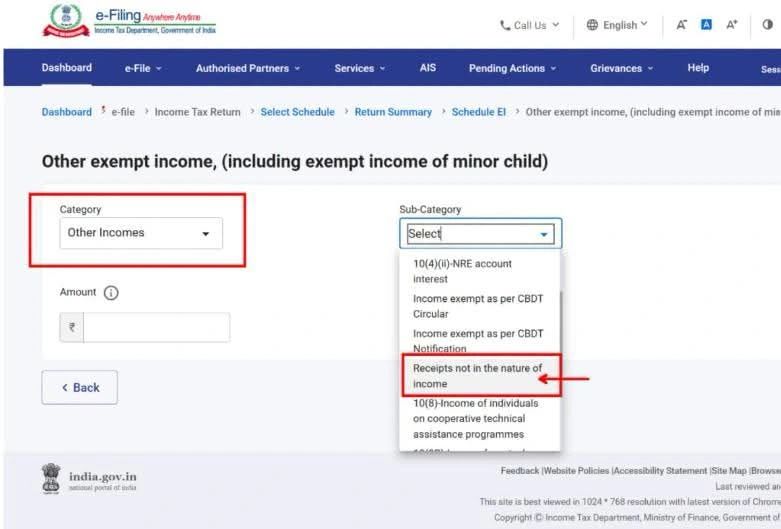
Table of Contents
Income Tax Return AY 2026-27: Reporting of Non-Taxable Receipts Made Easier
For AY 2026-27 (FY 2025-26), the income tax Dept has introduced a significant disclosure change in the ITR utility. A new disclosure field “Receipts not in the nature of income” has been introduced under Schedule EI (Exempt Income) to Other Incomes. The earlier residual field “Other Exempt Income” has effectively been replaced for reporting such non-income receipts.
Why has this field been introduced?
- Many taxpayers were reporting the following in “Other Exempt Income”: gifts from relatives, Sale proceeds of rural agricultural land, Loans received, Capital introduced by the proprietor, and Inheritance received
- Technically, many of these are not exempt income. They are simply not income at all under the Income Tax Act. Therefore, CBDT has now provided a separate disclosure field.
- The objective is better transparency, explanation of large bank credits appearing in AIS/SFT, and reduction in future scrutiny notices. And proper distinction between exempt income and non-income receipts.
- We should appreciate the legal distinction between exempt income (income exists but tax is exempt), and Receipts not in the Nature of income (no income arises at all).
What exactly has changed?
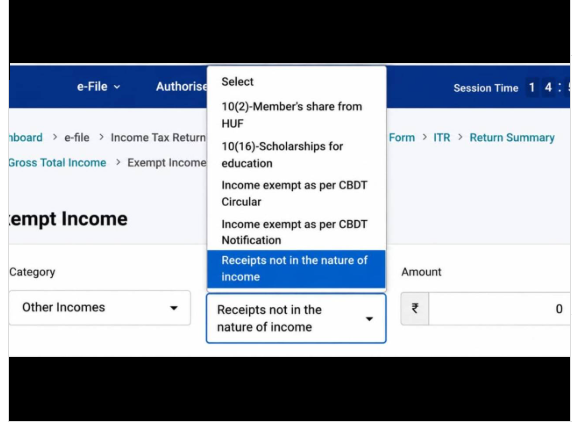
- For AY 2026-27, the Income Tax Dept utility/schema has introduced a separate disclosure category: Schedule EI → Other Incomes → Receipts not in the nature of income
- The intent is to provide a dedicated reporting mechanism for amounts received that do not constitute income under the Income Tax Act, instead of clubbing them under the residual “Other Exempt Income” field.
Important Concept
- Exempt Income : These are incomes that are specifically exempt under the Act.
- Examples: Agricultural income, interest on Public Provident Fund, interest on Sukanya Samriddhi Account, and share of profit from a partnership firm. These continue to be reported under the relevant exempt income heads.
Receipts Not in the Nature of Income
- These are amounts received that do not fall within the charging provisions of the Act at all. Examples: Loan received, Gift from specified relatives, Inheritance, Capital introduced by proprietor, Sale proceeds of rural agricultural land and Security deposit refund. These may be disclosed under the new field.
Difference Between Exempt Income and Non-Income Receipts
Exempt Income: This is income but specifically exempt from tax. Examples: agricultural income, Public Provident Fund interest, Sukanya Samriddhi interest, and share of profit from a partnership firm. These should interest those to be reported in their respective exempt income categories.
Receipts Not in Nature of Income: These are amounts received but do not constitute income itself. Examples: Loan received from bank, gift from father, inheritance from parents, capital introduced by proprietor, and transfer between own bank accounts. These can be reported in the new field.
Practical Examples: Receipts Not in Nature of Income
- Gift from Father: Mr. A receives INR 15 lakh from his father. As far as taxability is concerned, it is not taxable. and covered under relative exemption. and its reporting: Can be disclosed under “Receipts not in the nature of income.”
- Housing Loan Received: Loan from SBI for INR 40 lakh. As far as taxability is concerned, a loan is not income. taxabilityng to be made a loan under this field for transparency.
- Inheritance Received: Person inherits INR 50 lakh from mother. As far as taxability is concerned, it is not taxable. Its reporting will be made like it can be disclosed under this field.
- Proprietor Introducing Own Capital: Cash introduced by the proprietor: INR 10 lakh from personal savings. As far as taxability is concerned, it is not income. As far as reporting is concerned, it is a suitable disclosure under this category.
- Sale of Rural Agricultural Land: Sale proceeds INR 35 lakh. As far as taxability is concerned, it is generally outside capital gains because rural agricultural land is not a capital asset. It is reporting that will be made like it can be disclosed under this field.
- Money Transferred Between Own Accounts: Savings A/c to Current A/c: INR 20 lakh. As far as taxability is concerned, it is not income. But its reporting will be made, like it may be disclosed if it helps explain large credits.
What Should NOT Be Reported Here?
Many taxpayers may make mistakes. Do not report: Salary : INR 12 lakh salary received. It is Report under: Salary head.
Items Which Should Generally NOT Be Reported Here: Salary, professional receipts, business turnover, interest income, rent income, taxable capital gains, and dividend income. These are taxable items and must be reported under the appropriate head of income.
Areas Where Professional Caution Is Required
The profession is currently debating the extent of reporting. If we literally report every non-income receipt, then the list becomes endless: Own bank account transfers, credit card refunds, security deposit refunds, reimbursement from friends, Salary advance recoveries, and family fund transfers.
In practice, the better approach appears to be reporting material/high-value receipts that may otherwise create reconciliation issues with AIS, SFT reporting, Bank statement analysis, and assessment proceedings. This is also the rationale highlighted by tax experts discussing the new field.
Professional Receipts
- A chartered accountant receives professional fees. Report under: Profits and Gains from Business or Profession.
- Rent Received: Report under : House Property.
- Interest Income: Report under Income from Other Sources
- Capital Gains: Report under: Capital Gaunder CapitalTaxable income should never be shifted to this disclosure field.
Is Reporting Mandatory?
This is the most important practical question. As of now, the field appears to be primarily a disclosure mechanism in the online utility. Tax experts generally view it as a transparency measure rather than a charging provision. It does not create any additional tax liability.
In my professional view as a tax reporting matter: Report when receipt is substantial and credit appears in bank account; transaction may reflect in Annual Information Statement / Statement of Financial Transactions, and taxpayer may need to explain source of funds later. Examples: Gift of INR 20 lakh, Inheritance of INR 1 crore, Loan of INR 50 lakh and Rural agricultural land sale of INR 80 lakh
Avoid unnecessary reporting of petty items: INR 5,000 reimbursement, small inter-account transfers, unless required for reconciliation.
Suggested professional approach: For AY 2026-27 onwards, whenever there is a high-value credit in a bank account that is not taxable and not income, prepare a separate reconciliation sheet containing the nature of the receipt, amount, date received, supporting documents, and whether it was reported in the ITR under “Receipts not in the nature of income.” This will help immensely during future assessment proceedings.
My Professional View
For AY 2026-27 onwards, I would advise disclosure where the amount is substantial, credit appears prominently in the bank account, a source explanation may be required later, and the transaction is genuinely outside the definition of income. Whereas routine internal transfers and petty reimbursements generally need not be unnecessarily cluttered into the return unless they are material.
Key Takeaway on Reporting of Non-Taxable Receipts Made Easier
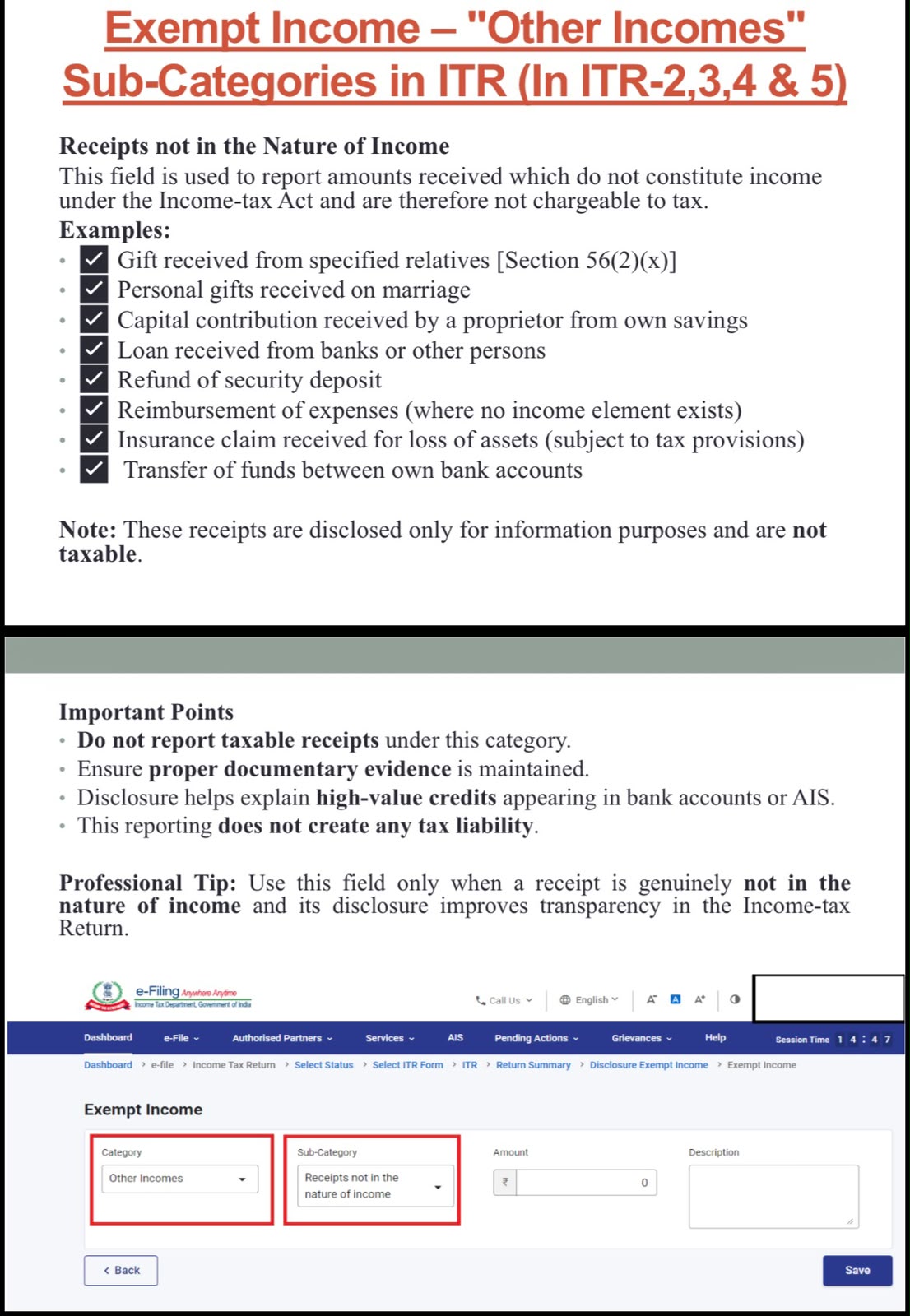
The new field is not a new tax provision and does not make any receipt taxable. It is merely an enhanced disclosure mechanism to separately report capital receipts and other receipts that are not income at all, thereby improving transparency and helping explain high-value credits appearing in AIS or bank accounts.
As a chartered accountant, I would treat this as a reconciliation and litigation-risk management disclosure, rather than a computation-related disclosure.
The new field is a welcome disclosure tool, especially for explaining large credits such as gifts from relatives, loans, inheritance, rural agricultural land sale proceeds, capital contribution by proprietor, refund of deposits, and insurance claim receipts (where not taxable).
It is not a new tax provision, not a new source of income, and does not make these receipts taxable. It is merely a separate reporting bucket for receipts that are outside the definition of income itself
**********************************************************
If this article has helped you in any way, i would appreciate if you could share/like it or leave a comment. Thank you for visiting my blog.
Legal Disclaimer:
The information / articles & any relies to the comments on this blog are provided purely for informational and educational purposes only & are purely based on my understanding / knowledge. They do noy constitute legal advice or legal opinions. The information / articles and any replies to the comments are intended but not promised or guaranteed to be current, complete, or up-to-date and should in no way be taken as a legal advice or an indication of future results. Therefore, i can not take any responsibility for the results or consequences of any attempt to use or adopt any of the information presented on this blog. You are advised not to act or rely on any information / articles contained without first seeking the advice of a practicing professional.