Decode Your AIS: A Practical Guide for Taxpayers
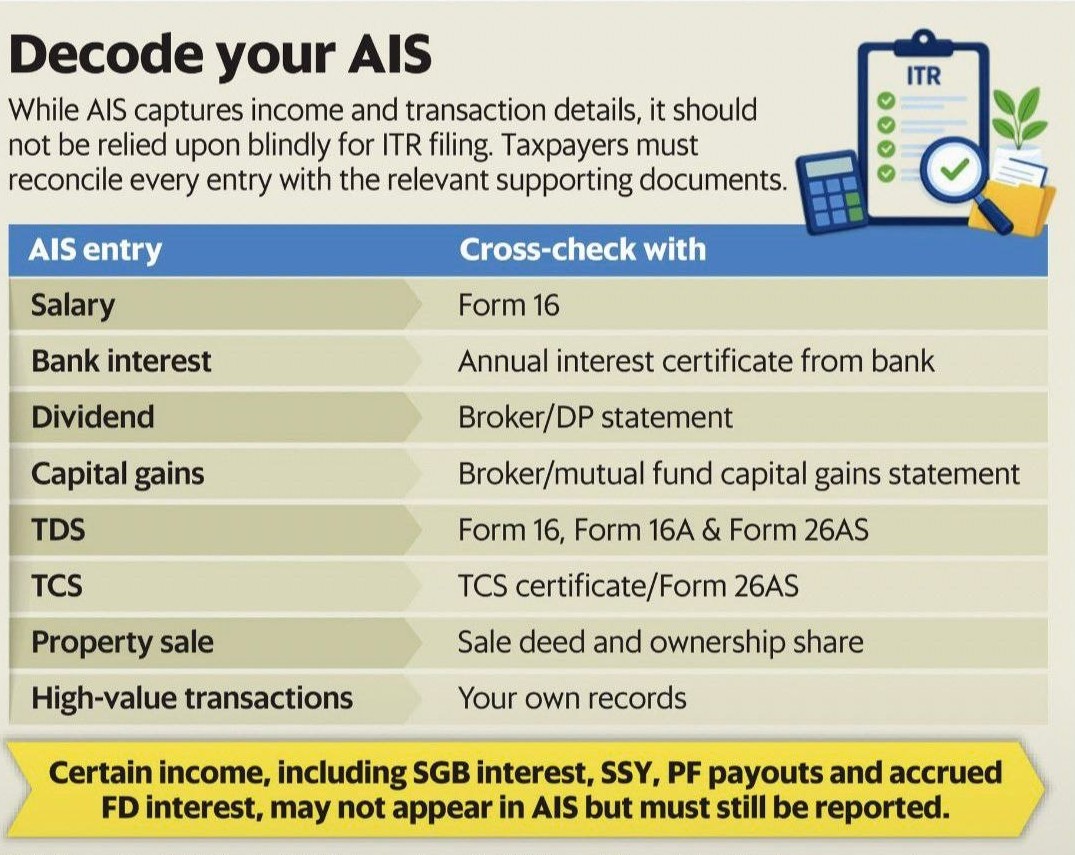
Table of Contents
Decode Your Annual Information Statement: A Practical Guide for Taxpayers
The Annual Information Statement provides a comprehensive view of your income, taxes paid, and specified financial transactions. However, taxpayers should not rely solely on AIS while filing their Income Tax Return. Every entry appearing in Annual Information Statement should be reconciled with the relevant supporting documents to ensure accurate reporting and avoid notices from the Income Tax Dept.
Annual Information Statement Entries and Documents to Cross-Check
- Salary Income: Verify salary income reported in Annual Information Statement with Form 16 and Salary slips (if required)
- Bank Interest: Cross-check interest reported in Annual Information Statement with Annual Interest Certificate issued by the bank and Bank account statements
- Dividend Income: Verify dividend income using a broker statement, Demat account statement and Dividend statements from companies or mutual funds
- Capital Gains: Reconcile capital gains appearing in AIS with Broker Capital Gains Statement, Mutual Fund Capital Gains Report and Contract Notes and transaction statements
- Tax Deducted at Source: Verify Tax Deducted at Source credits with Form 16, Form 16A and Form 26AS
- Tax-Collected at Source: Cross-check Tax Collected at Source details with Tax Collected at Source Certificate and Form 26AS
- Property Sale Transactions: Verify property sale information using the sale deed, ownership documents, and ownership share allocation among co-owners.
- High-Value Transactions: Reconcile AIS entries relating to Cash deposits, Credit card payments, investments, property transactions, and foreign remittances with your own records and supporting documentation.
Certain income may not appear in AIS
Certain income may not appear in Annual Information Statement, but it is still taxable or reportable and must be disclosed in the ITR. Examples include Sovereign Gold Bond interest, Sukanya Samriddhi Yojana Income (where applicable for reporting purposes), Provident Fund withdrawals/payouts , accrued fixed deposit interest, and Other income not reported by a third party
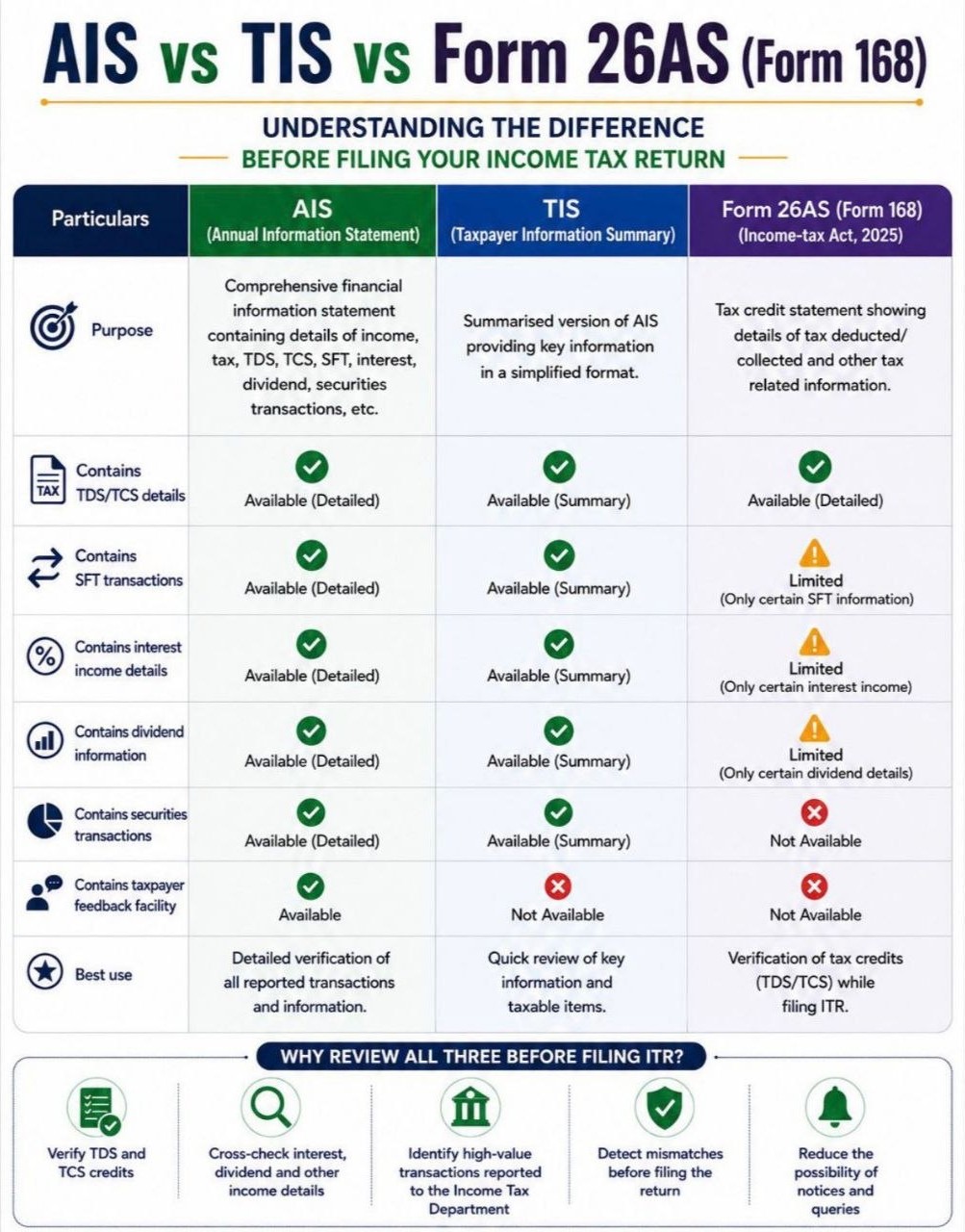
An Annual Information Statement is a useful compliance tool, but it is not a substitute for maintaining proper records. Before filing your ITR, reconcile the Annual Information Statement with Form 16, Form 26AS, bank statements, broker reports, capital gains statements, and other supporting documents. Any income omitted from the annual information statement but taxable under the Income-tax Act must still be reported correctly in the return.
ITR AY2026-27 Changes Checklist
**********************************************************
If this article has helped you in any way, i would appreciate if you could share/like it or leave a comment. Thank you for visiting my blog.
Legal Disclaimer:
The information / articles & any relies to the comments on this blog are provided purely for informational and educational purposes only & are purely based on my understanding / knowledge. They do noy constitute legal advice or legal opinions. The information / articles and any replies to the comments are intended but not promised or guaranteed to be current, complete, or up-to-date and should in no way be taken as a legal advice or an indication of future results. Therefore, i can not take any responsibility for the results or consequences of any attempt to use or adopt any of the information presented on this blog. You are advised not to act or rely on any information / articles contained without first seeking the advice of a practicing professional.