Direct Tax Collections FY 2026-27 -Detailed Analysis

Table of Contents
Direct Tax Collections FY 2026-27 (as on 10 August 2026) – Detailed Analysis
The table compares direct tax collections up to 10 August 2026 with the corresponding period of FY 2025-26. It covers Gross Direct Tax Collections (before refunds), Refunds Issued and Net Direct Tax Collections (after deducting refunds)
All figures are in INR crore.
Overall Snapshot
| Particulars | FY 2025-26 (As on 10.08.2025) | FY 2026-27 (As on 10.08.2026) | Growth |
| Gross Direct Tax Collection | 7,97,327.83 | 9,54,775.91 | 19.75% |
| Refunds Issued | 1,38,213.80 | 1,43,451.40 | 3.79% |
| Net Direct Tax Collection | 6,59,114.03 | 8,11,324.51 | 23.09% |
Key Takeaways: Gross tax collections increased by nearly 20%. Refund growth was only 3.79%, much lower than collection growth. Net collections surged by 23.09%, indicating stronger tax revenue realization for the government.
Gross Direct Tax Collections:
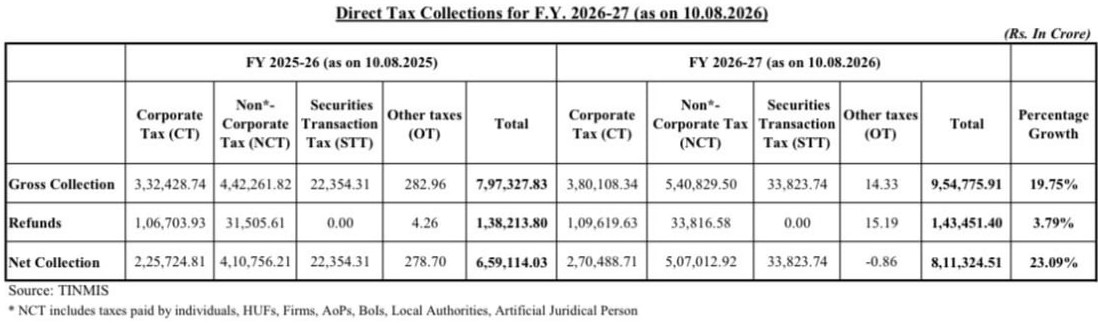
Gross collections represent taxes received before adjustment of refunds.
| Tax Head | FY 2025-26 | FY 2026-27 | Increase |
| Corporate Tax | 3,32,428.74 | 3,80,108.34 | +47,679.60 |
| Non-Corporate Tax | 4,42,261.82 | 5,40,829.50 | +98,567.68 |
| Securities Transaction Tax (STT) | 22,354.31 | 33,823.74 | +11,469.43 |
| Other Taxes | 282.96 | 14.33 | -268.63 |
| Total Gross Collection | 7,97,327.83 | 9,54,775.91 | +1,57,448.08 |
Analysis: Corporate Tax: Collection increased from INR 3.32 lakh crore to INR 3.80 lakh crore. Growth of approximately 14.34%. This reflects Better corporate profitability, Strong advance tax payments and Improved compliance
Non-Corporate Tax
- Collection increased from INR 4.42 lakh crore → INR 5.41 lakh crore. Growth of about 22.29%. This is the biggest contributor to overall growth. Non-Corporate Tax includes Individual taxpayers, HUFs, Partnership Firms, LLPs, AOPs, BOIs and local authorities.
- The sharp rise suggests higher TDS collections, an increase in salaried incomes, better reporting and compliance, and growth in business and professional incomes.
Securities Transaction Tax (STT)
Collection increased from INR 22,354 crore → INR 33,824 crore. Growth of approximately 51.31%. This shows very high stock market trading activity, higher turnover in equity and derivatives segments, and increased investor participation. This is one of the strongest growth areas.
Refunds Analysis
| Tax Head | FY 2025-26 | FY 2026-27 |
| Corporate Tax Refund | 1,06,703.93 | 1,09,619.63 |
| Non-Corporate Refund | 31,505.61 | 33,816.58 |
| STT Refund | 0.00 | 0.00 |
| Other Taxes Refund | 4.26 | 15.19 |
| Total Refunds | 1,38,213.80 | 1,43,451.40 |
Key Observation: Refunds have increased only by INR 5,237.60 crore, or 3.79%. This is significantly lower than the growth in gross tax collections. This has resulted in higher net tax realization.
Net Direct Tax Collections:
Net Collection = Gross Collection – Refunds
| Tax Head | FY 2025-26 | FY 2026-27 |
| Corporate Tax | 2,25,724.81 | 2,70,488.71 |
| Non-Corporate Tax | 4,10,756.21 | 5,07,012.92 |
| STT | 22,354.31 | 33,823.74 |
| Other Taxes | 278.70 | -0.86 |
| Total Net Collection | 6,59,114.03 | 8,11,324.51 |
Net Collection Growth :
Increase INR 8,11,324.51 crore – INR 659,114.03 crore = INR 152,210.48 crore. Growth: 23.09%. This is substantially higher than the growth in gross collections because refunds have not increased proportionately.
Major Drivers of Growth
- Strong Non-Corporate Tax Collections: Nearly INR 98,568 crore increase. Likely due to higher TDS deductions, better return filing compliance, data analytics by the income tax department, and growth in professional and business income.
- Robust Corporate Performance: Corporate tax collections increased by almost INR 47,680 crore. Indicates: Improved profitability of businesses, Higher advance tax payments, and a wider tax base.
- Record STT Collections: STT growth of over 51% reflects Buoyant capital markets. Increased retail investor participation and Higher trading volumes
What Does This Mean for Taxpayers?
- For Businesses: The Income Tax Department is witnessing strong revenue growth and is likely to continue using data analytics and compliance monitoring. Businesses should reconcile TDS returns, AIS, Form 26AS and GST and Income Tax data
- For Individuals: Increased non-corporate tax collections indicate stronger scrutiny of High-value transactions, Professional receipts, Capital gains and Interest and dividend income
- For the Government: The strong 23.09% rise in net direct taxes improves fiscal resources and supports government expenditure without significant reliance on additional borrowing.
Conclusion:
Data on Gross Direct Tax (DT) collections, refunds, and Net Direct Tax (DT) collections for FY 2026-27 as on 10.08.2026 has been released. As on 10 August 2026, direct tax collections show a very healthy trend:
- Gross Collections: INR 9.55 lakh crore (+19.75%)
- Refunds Issued: INR 1.43 lakh crore (+3.79%)
- Net Collections: INR 8.11 lakh crore (+23.09%)
The major growth drivers are non-corporate tax collections and securities transaction tax, indicating stronger taxpayer compliance, higher income levels, and robust capital market activity. Overall, the figures reflect a positive tax revenue environment and continued strengthening of India’s direct tax ecosystem.
**********************************************************
If this article has helped you in any way, i would appreciate if you could share/like it or leave a comment. Thank you for visiting my blog.
Legal Disclaimer:
The information / articles & any relies to the comments on this blog are provided purely for informational and educational purposes only & are purely based on my understanding / knowledge. They do noy constitute legal advice or legal opinions. The information / articles and any replies to the comments are intended but not promised or guaranteed to be current, complete, or up-to-date and should in no way be taken as a legal advice or an indication of future results. Therefore, i can not take any responsibility for the results or consequences of any attempt to use or adopt any of the information presented on this blog. You are advised not to act or rely on any information / articles contained without first seeking the advice of a practicing professional.