Analysis of the Tax Regime Comparison Chart
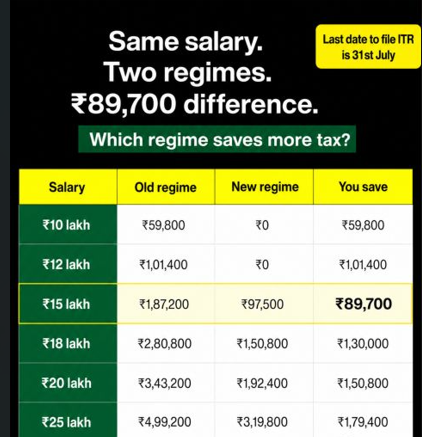
Table of Contents
Analysis of the Tax Regime Comparison Chart
compares the old tax regime vs. the new tax regime for salaried taxpayers and highlights how choosing the wrong regime can significantly increase tax liability. Following are Tax Comparison Table
| Gross Salary | Old Regime Tax | New Regime Tax | Tax Saving Under New Regime |
| INR 10 Lakh | INR 59,800 | INR 0 | INR 59,800 |
| INR 12 Lakh | INR 1,01,400 | INR 0 | INR 1,01,400 |
| INR 15 Lakh | INR 1,87,200 | INR 97,500 | INR 89,700 |
| INR 18 Lakh | INR 2,80,800 | INR 1,50,800 | INR 1,30,000 |
| INR 20 Lakh | INR 3,43,200 | INR 1,92,400 | INR 1,50,800 |
| INR 25 Lakh | INR 4,99,200 | INR 3,19,800 | INR 1,79,400 |
The chart demonstrates that the New Tax Regime generally provides a lower tax burden for taxpayers who have limited deductions. However, taxpayers with substantial HRA benefits, home loan deductions, or other significant exemptions should calculate both regimes before filing their ITR to determine the most beneficial option. At a salary of INR 15 lakh, the tax difference can be as high as INR 89,700, making regime selection a critical tax-planning decision. Key Takeaways
Comparison of Tax Rates under the Old vs New Tax Regime (FY 2025-26)
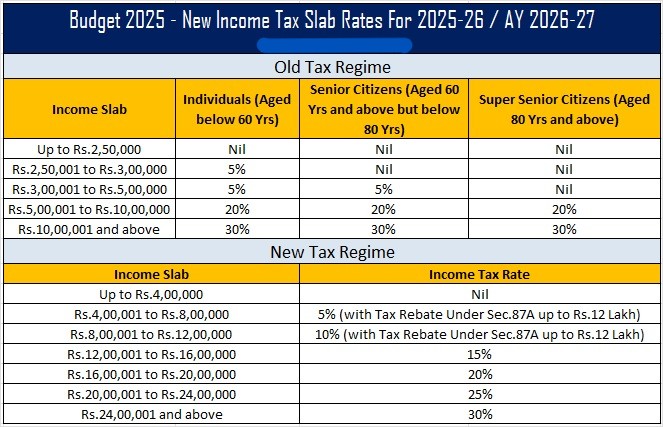
The New Tax Regime offers lower and more gradual tax rates across different income slabs, whereas the Old Tax Regime has higher tax rates but allows taxpayers to claim various deductions and exemptions such as HRA, Section 80C, Section 80D, home loan benefits, and others. Under the Old Regime, tax rates are generally the following:
- Nil up to the basic exemption limit.
- 5% on income up to ₹5 lakh.
- 20% on income between ₹5 lakh and ₹10 lakh.
- 30% on income exceeding ₹10 lakh.
Under the new regime (FY 2025-26), tax rates are structured more progressively:
- Nil up to INR 4 lakh.
- 5% on income from ₹4 lakh to ₹8 lakh.
- 10% on income from ₹8 lakh to ₹12 lakh.
- 15% on income from ₹12 lakh to ₹16 lakh.
- 20% on income from ₹16 lakh to ₹20 lakh.
- 25% on income from ₹20 lakh to ₹24 lakh.
- 30% on income above ₹24 lakh.
Key Takeaway
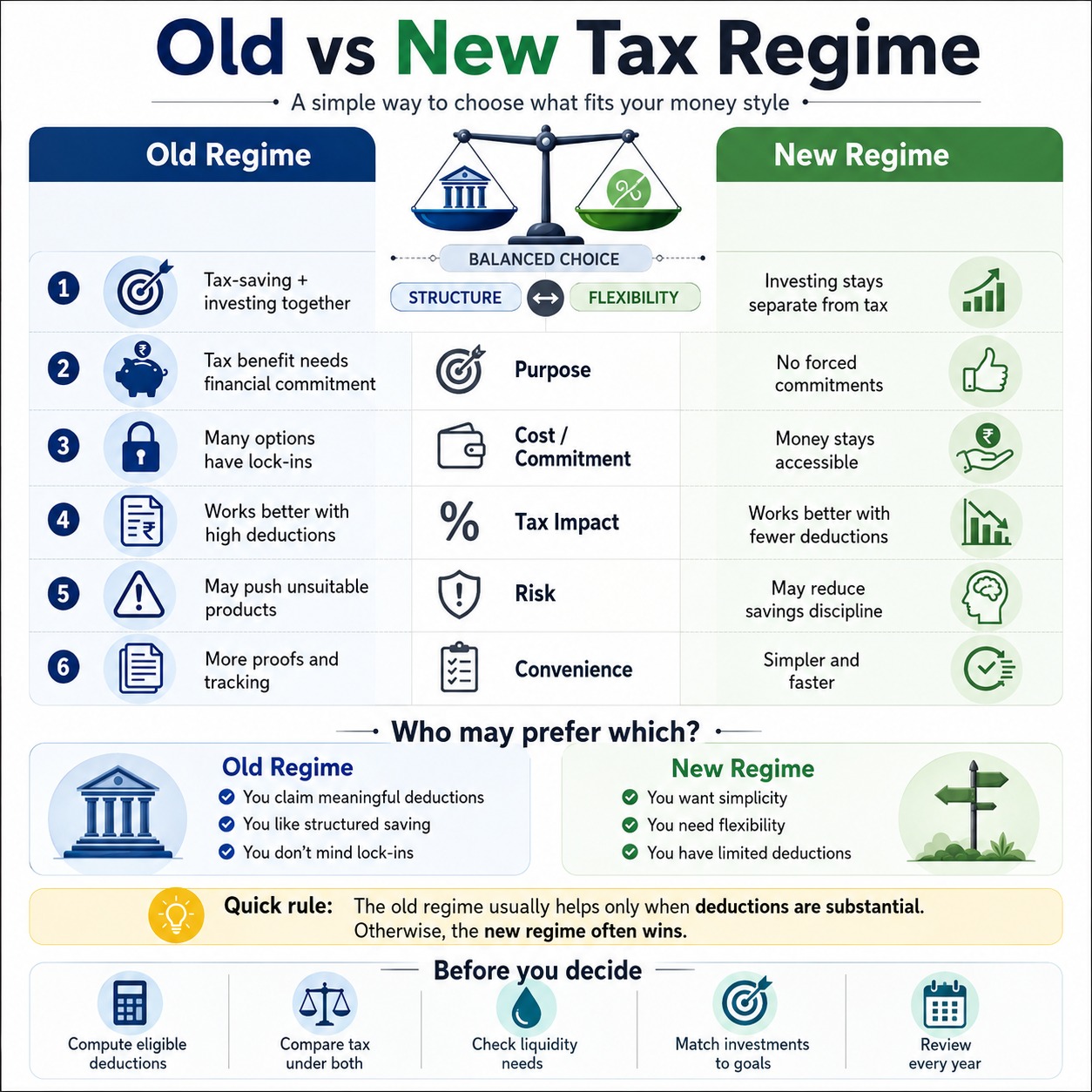
The New Tax Regime generally benefits taxpayers who have limited deductions and exemptions, as it offers lower tax rates across most income brackets. However, taxpayers with substantial deductions such as HRA, home loan interest, NPS contributions, and Section 80C investments may still find the Old Tax Regime more advantageous. Therefore, taxpayers should compare their actual tax liability under both regimes before filing their Income Tax Return (ITR)
Salary up to INR 12.75 Lakh:
Under the new tax regime, a salaried taxpayer can effectively pay nil tax due to:
- Standard Deduction: INR 75,000
- Rebate u/s 87A: Up to INR 60,000
Therefore, for taxpayers whose gross salary does not exceed approximately INR 12.75 lakh, the New Regime is generally more beneficial.
Break-Even Deduction Levels:
The Old Regime becomes beneficial only if total deductions and exemptions exceed the following approximate amounts:
| Salary | Required Deductions for Old Regime to Match New Regime |
| INR 15 Lakh | INR 5.44 Lakh |
| INR 18 Lakh | INR 6.42 Lakh |
| INR 20 Lakh | INR 7.08 Lakh |
| INR 25 Lakh | INR 8.00 Lakh |
If actual deductions are lower than these figures, the New Regime usually results in lower tax.
Why Most Taxpayers Prefer the New Regime
Many taxpayers typically claim:
- Section 80C: INR 1.50 lakh
- Section 80D (Medical Insurance): INR 25,000
- NPS u/s 80CCD(1B): INR 50,000
Total Common Deductions = INR 2.25 lakh
At a salary of INR 15 lakh, these deductions are substantially lower than the break-even requirement of INR 5.44 lakh. Consequently, the New Regime generally produces a lower tax outgo.
When the Old Regime May Be Better
The old regime can become advantageous when a taxpayer has substantial deductions such as:
- High HRA exemption (especially in metro cities)
- Significant home loan interest deduction
- Large eligible deductions and exemptions under various provisions
Important Planning Point
For salaried employees The tax regime selected with the employer is not final. The regime can be changed while filing the Income Tax Return (subject to applicable rules).
For taxpayers having business or professional income, switching options are more restricted and should be carefully evaluated before filing.
**********************************************************
If this article has helped you in any way, i would appreciate if you could share/like it or leave a comment. Thank you for visiting my blog.
Legal Disclaimer:
The information / articles & any relies to the comments on this blog are provided purely for informational and educational purposes only & are purely based on my understanding / knowledge. They do noy constitute legal advice or legal opinions. The information / articles and any replies to the comments are intended but not promised or guaranteed to be current, complete, or up-to-date and should in no way be taken as a legal advice or an indication of future results. Therefore, i can not take any responsibility for the results or consequences of any attempt to use or adopt any of the information presented on this blog. You are advised not to act or rely on any information / articles contained without first seeking the advice of a practicing professional.