FEMA Compounding & Late Submission Fee (LSF)
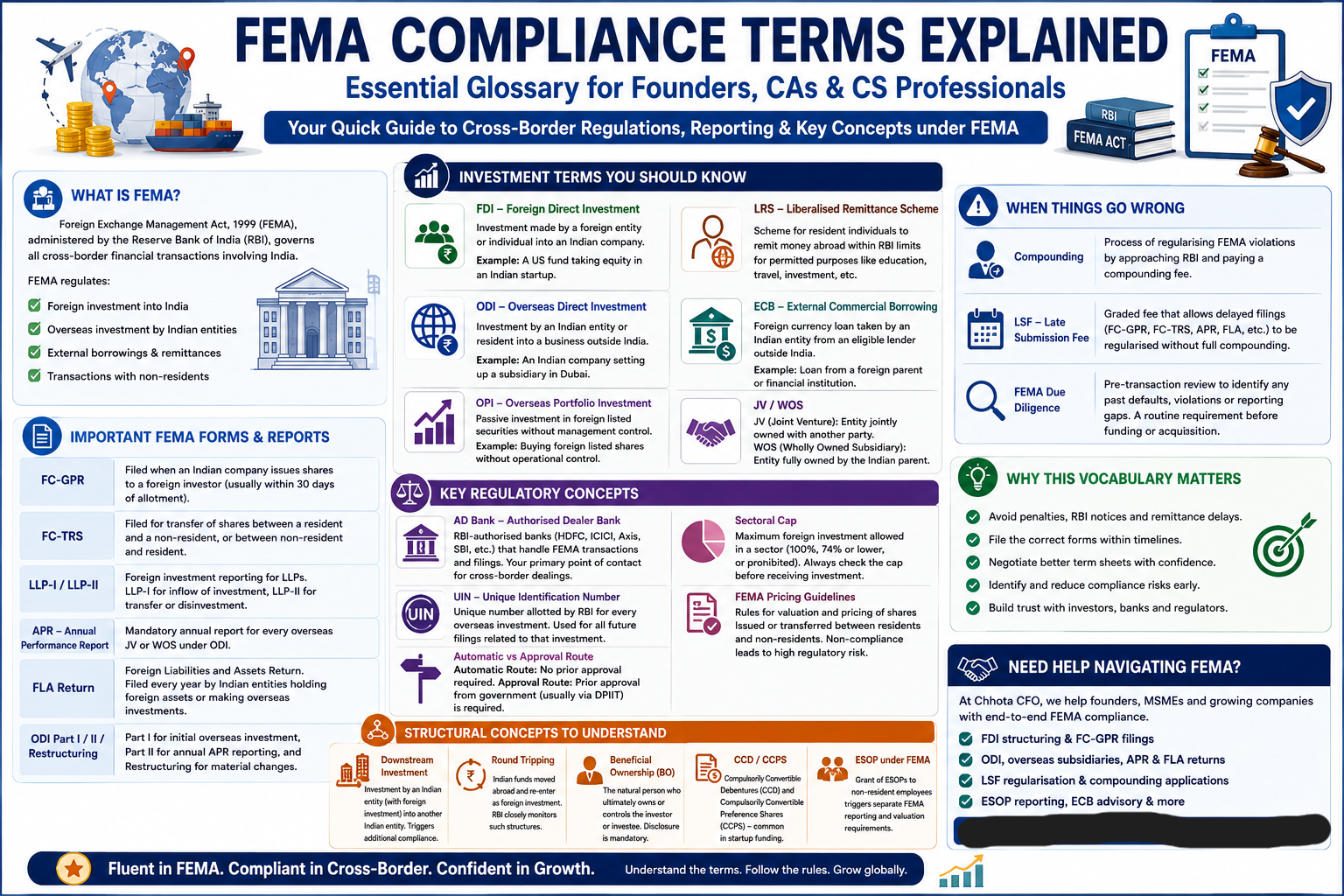
Table of Contents
Overview on FEMA Compounding & Late Submission Fee (LSF)
Here is a comprehensive understanding of the compounding of contraventions under the Foreign Exchange Management Act (FEMA), 1999, along with the Late Submission Fee (LSF) mechanism introduced by RBI. It is particularly relevant for chartered accountants, company secretaries, CFOs, compliance professionals, FDI/ODI consultants, and businesses dealing with cross-border transactions.
What is Compounding?
Compounding is the process through which a Foreign Exchange Management Act contravention is regularized upon voluntary application by the contravener. Instead of going through lengthy adjudication and penalty proceedings, the applicant pays a prescribed compounding amount and obtains regulatory closure.
What is a Contravention?
A contravention refers to any violation of Foreign Exchange Management Act 1999, FEMA Rules, Foreign Exchange Management Act Regulations, Directions, Circulars, Notifications and Orders issued under FEMA
Why Compounding Is Important
Foreign Exchange Management Act compliance is no longer limited to filing forms on time. Businesses must actively monitor FDI, ODI, ECB, LRS, export-import reporting, and other cross-border transactions. RBI’s compounding and LSF mechanisms provide a structured way to regularize violations, but prompt reporting and proactive compliance remain the best strategy to avoid penalties and regulatory scrutiny. Here we highlight several objectives:
- Provides relief for genuine and inadvertent compliance failures.
- Encourages voluntary disclosure.
- Helps companies achieve regulatory closure.
- Facilitates future transactions such as FDI, ODI, IPOs, fundraising, and M&A transactions
- Reduces litigation and adjudication burden on regulators.
Authority Responsible for Compounding
Enforcement Directorate (ED)
The Enforcement Directorate compounds contraventions under Section 3(a) of Foreign Exchange Management Act such as Hawala transactions, unauthorized foreign exchange dealings, settlement of transactions outside banking channels and unauthorized transfer of overseas assets/securities.
Reserve Bank of India (RBI) : RBI compounds all Foreign Exchange Management Act contraventions other than Section 3(a) violations.
Monetary Jurisdiction for Compounding under
RBI Limits
| Amount Involved | Authority |
| Up to INR 60 lakh | AGM |
| INR 60 lakh – INR 2.5 crore | DGM |
| Rs. 2.5 crore – INR 5 crore | GM |
| Above INR 5 crore | CGM |
Enforcement Directorate Limits
| Amount Involved | Authority |
| Up to INR 5 lakh | Deputy Director |
| INR 5 lakh – INR 10 lakh | Additional Director |
| Rs. 10 lakh – INR 50 lakh | Special Director |
| INR 50 lakh – INR 1 crore | Special Director + Deputy Legal Adviser |
| Above INR 1 crore | Director of Enforcement |
Common Foreign Exchange Management Act Contraventions
FDI-Related
- Delay in FC-GPR filing
- In case Delay in FC-TRS filing
- Delayed allotment of shares
- Pricing guideline violations
- Non-reporting of investments
- Downstream investment reporting failures
ODI Related
- Delay in Form FC filing
- Non-reporting of financial commitments
- Repatriation violations
- ODI through improper structures
ECB-Related
- Delay in ECB reporting
- End-use violations
- All-in-cost ceiling violations
- Default in repayment obligation
Export-Import Related
- Pending EDPMS or IDPMS closures
- Excess write-offs
- Improper set-offs
- Export realization failures
Pre-Requisites Before Applying for Compounding
Before filing a compounding application:
- The transaction must first be regularized.
- Post-facto approvals (where required) should be obtained.
- Pending filings should be completed.
- Non-compliant transactions may need to be unwound.
Contraventions That Cannot Be Compounded
Certain violations are excluded:
- Contraventions where amount is not quantifiable
- Cases involving illegal overseas assets under Section 37A
- Money laundering or terror financing concerns
- Cases where adjudication order is already passed
- Matters requiring further ED investigation
FEMA Compounding Process
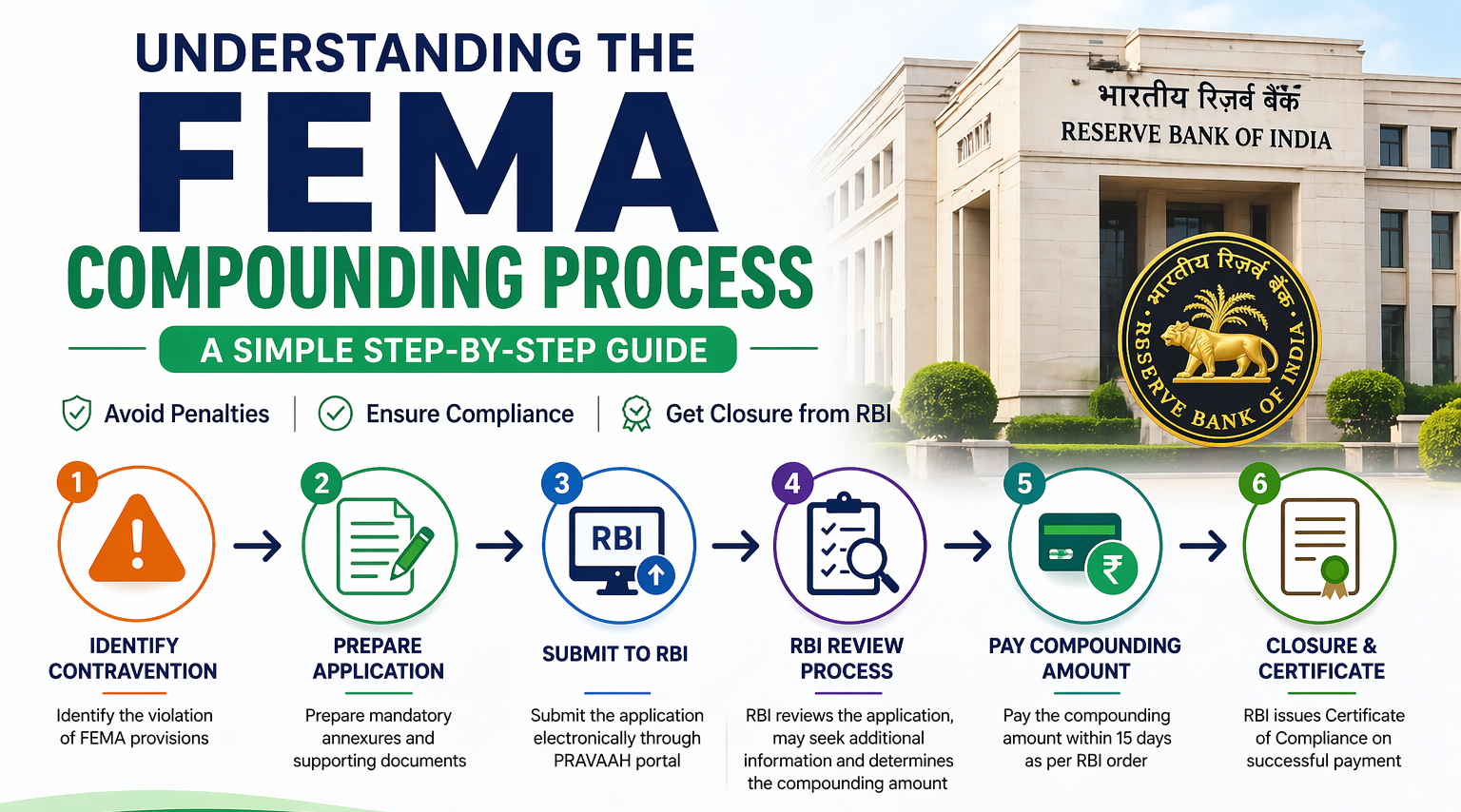
- Step-1: Prepare application with a covering letter, chronology of events, management certificate, and supporting documents.
- Step-2: Pay application fee and submit application.
- Step 3: RBI reviews documentation.
- Step 4: Additional information may be sought.
- Step 5: A personal hearing may be conducted.
- Step-6: RBI issues a compounding order.
- Step-7: Applicant pays compounding amount within 15 days.
Application Fee : The application fee is INR 10,000 + 18% GST
The application should include Applicant details, Contact information, FDI/ECB/ODI details, MOA (where applicable) and Declaration regarding investigation status. Compounding Order Timeline RBI must generally pass the compounding order within 180 days from receipt of complete application. Whether or not the applicant attends the hearing does not directly affect the compounding amount.
Payment of Compounding Amount
Payment must be made within 15 days. Payment can be through Demand Draft, NEFT or RTGS. Failure to pay within prescribed time results in the application being treated as if it was never filed.
PRAVAAH Portal
Applications can be filed through RBI’s PRAVAAH portal. PRAVAAH (Platform for Regulatory Application Validation And Authorisation) E-filing has become the standard mechanism from May 2025 onwards.
What is LSF?
Late Submission Fee (LSF)
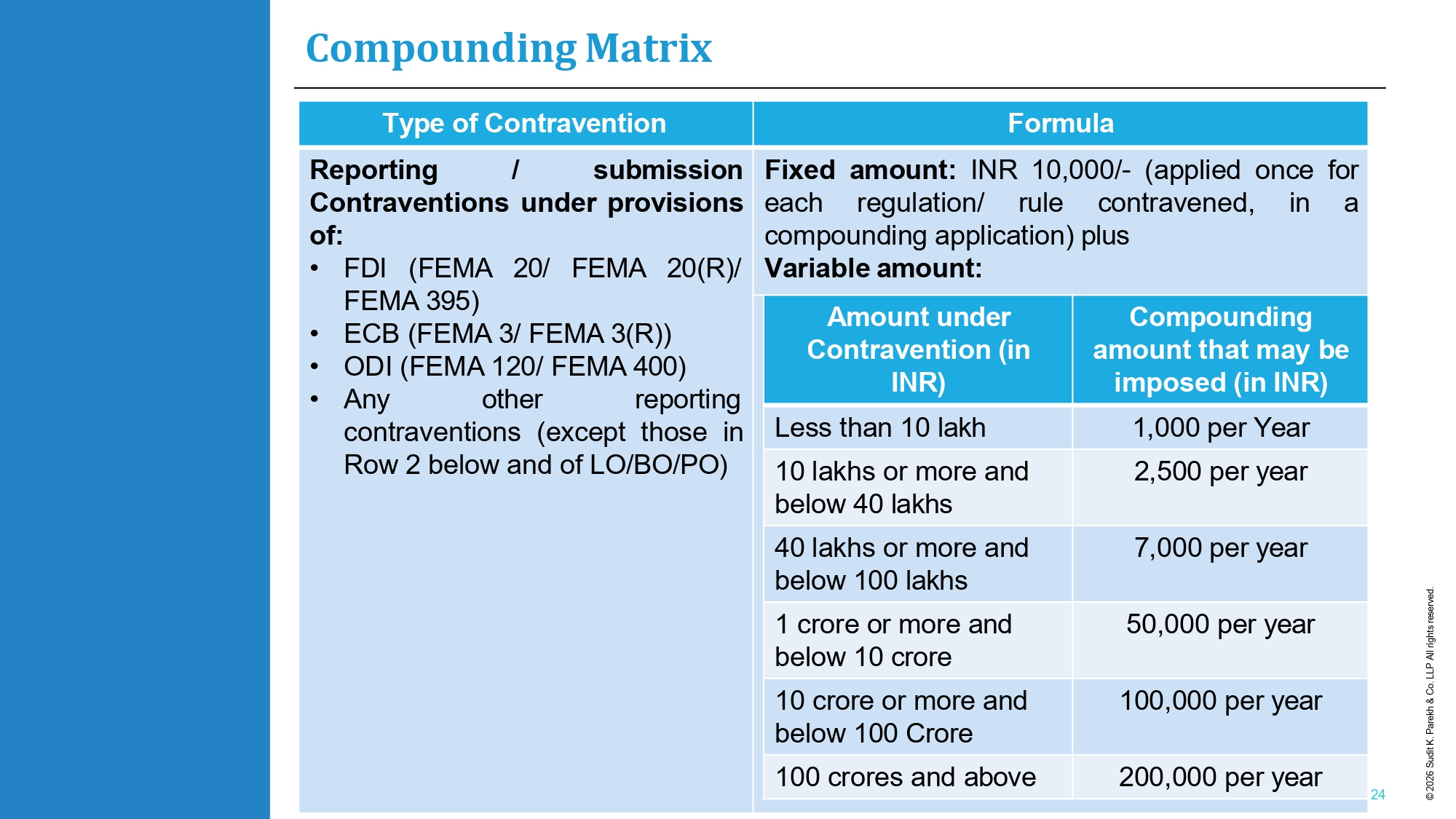
They dedicates significant attention to Late Submission Fee. The late submission fee is an administrative mechanism introduced by RBI for delayed Foreign Exchange Management Act reporting. Its purpose is to regularize FC-GPR delays, FC-TRS delays, ECB filings, ODI reporting and Annual returns. without undergoing the full compounding process.
When Can LSF Be Used?
- Late Submission Fee is available when Delay is only in reporting, Delay is within 3 years, No substantive Foreign Exchange Management Act violation exists.
- The Late Submission Fee cannot be used for Pricing violations, End-use violations, Sectoral cap violations and Other non-reporting contraventions.
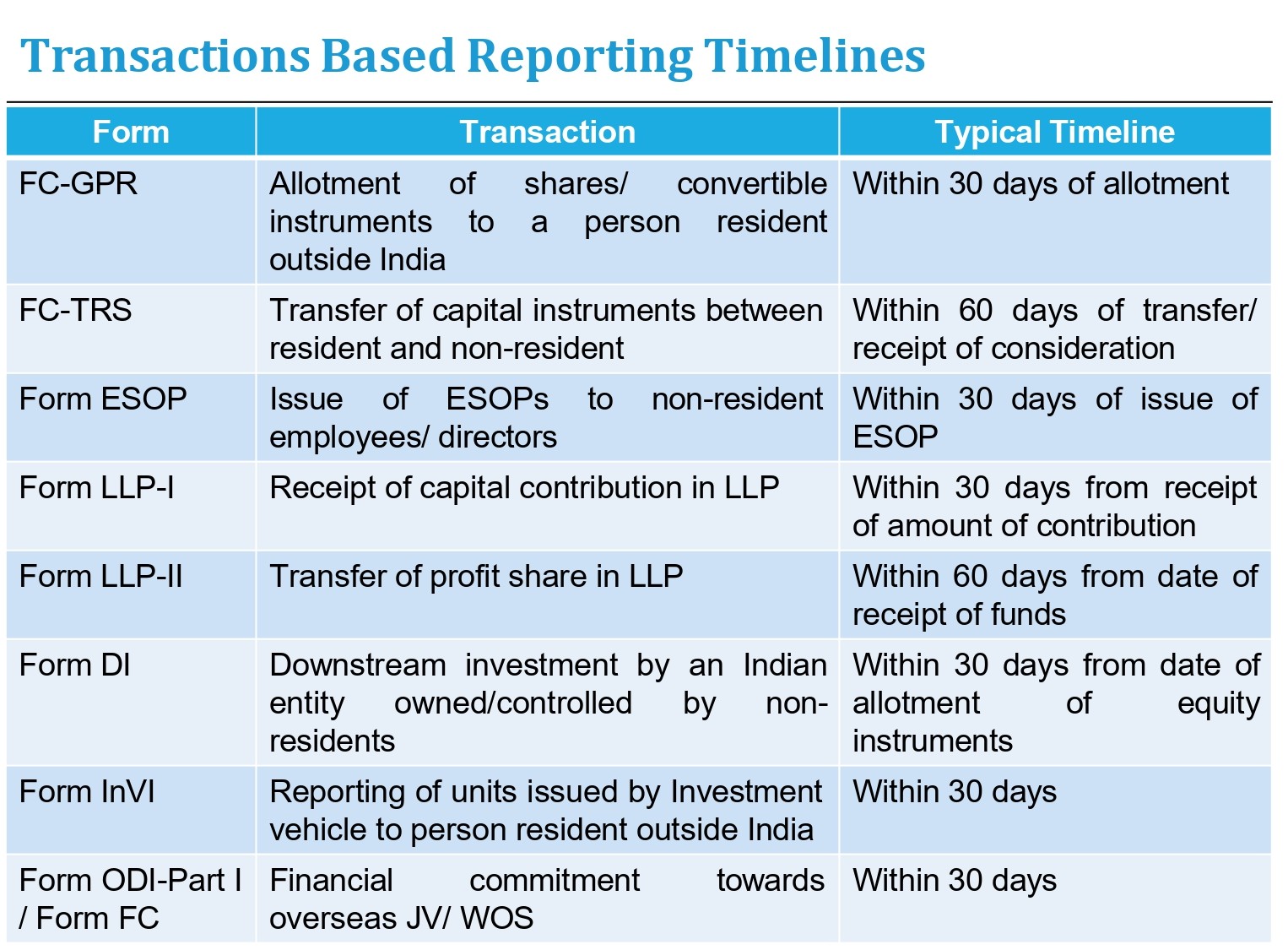
Foreign Exchange Management Act Reporting Timelines Covered
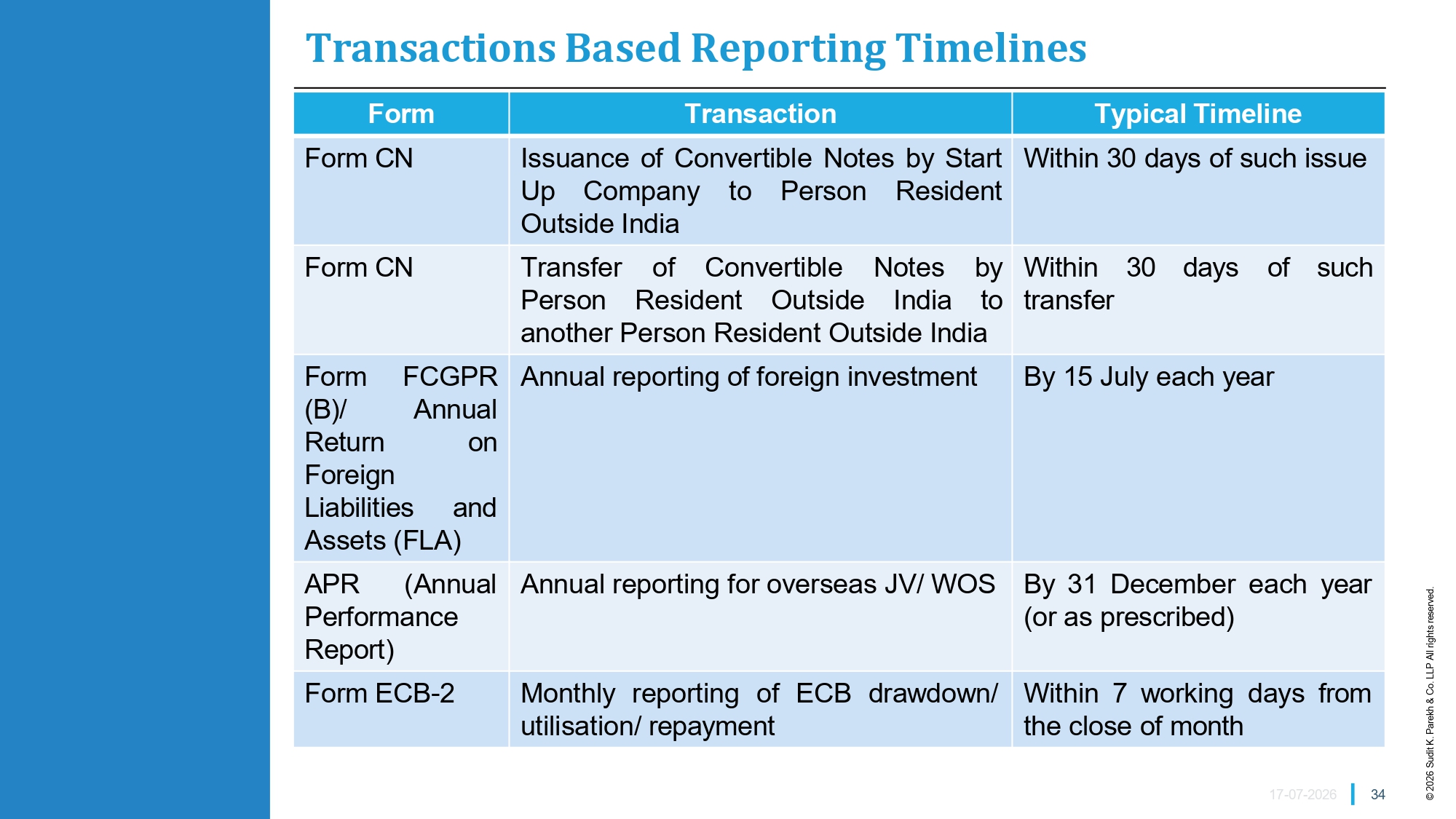
| Form | Timeline |
| FC-GPR | Within30 days of allotment |
| FC-TRS | Within 60 days |
| ESOP Reporting | then Within 30 days |
| LLP-I | Within 30 days |
| Form DI | then Within 30 days |
| ODI Form FC | Within 30 days |
| FLA Return | By 15 July |
| APR | It has to file By 31 December |
| ECB-2 | Within 7 working days from month-end |
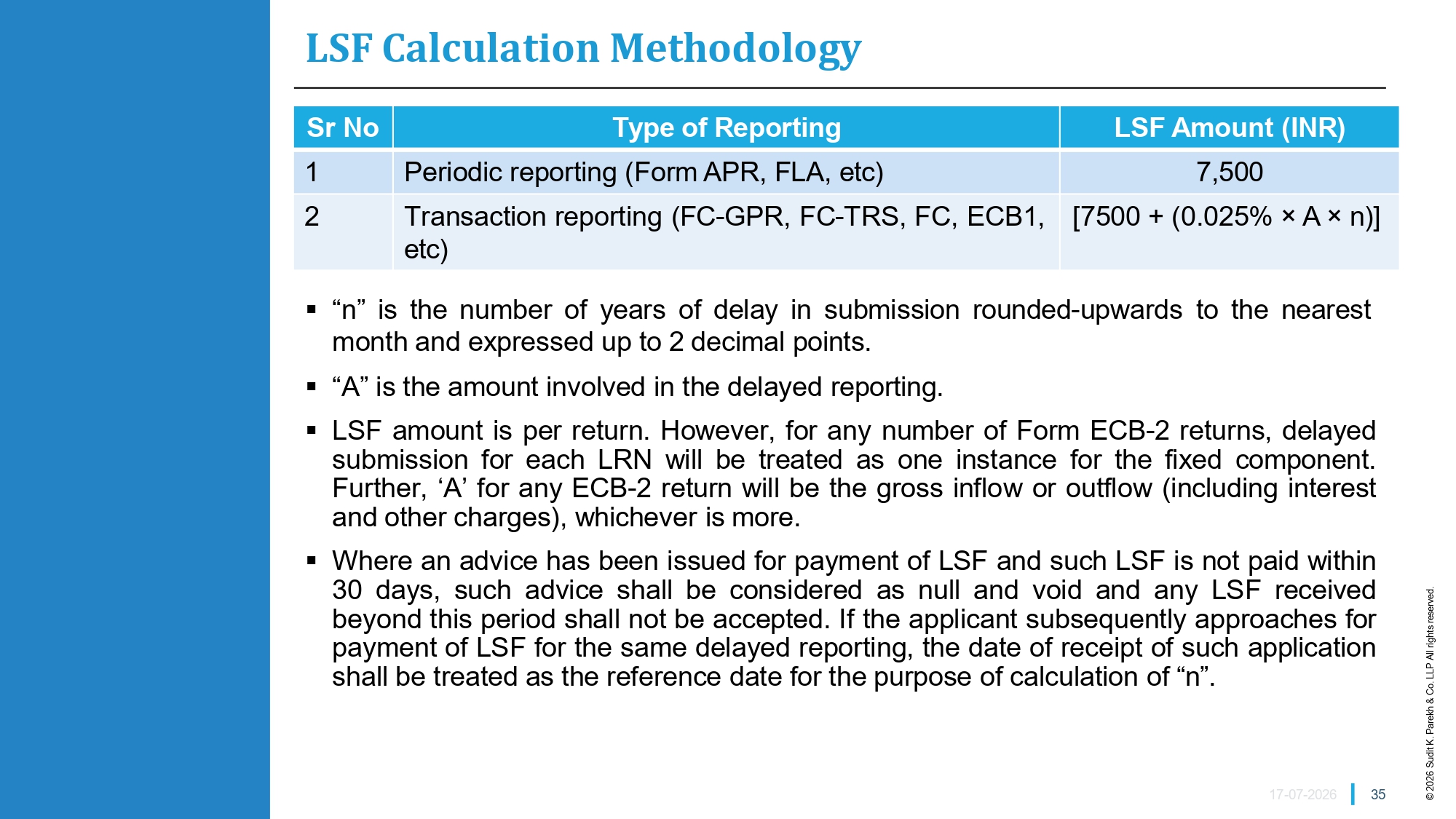
Late Submission Fee (LSF) Calculation
- Periodic Reporting : Flat fee: INR 7,500
- Transaction Reporting : Formula: INR 7,500 + (0.025% × Amount × Number of Years of Delay)
- The amount is calculated based on Transaction amount and Duration of reporting delay.
Compounding Vs Late Submission Fee(LSF)
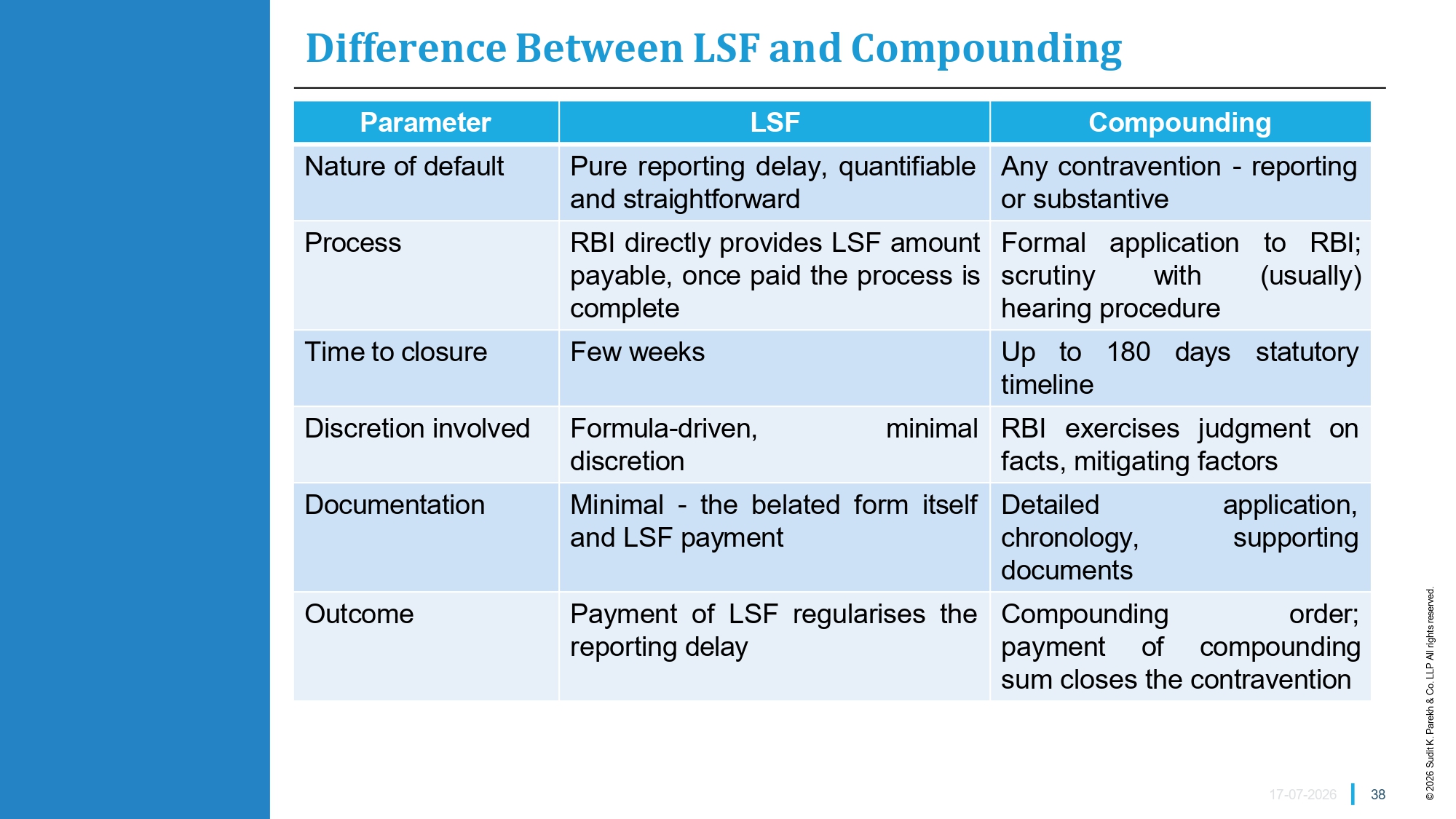
| Particulars | Late Submission Fee | Compounding |
| Nature | Reporting delays only | Any FEMA contravention |
| Process | Formula based | Detailed scrutiny |
| Timeline | Few weeks | Up to 180 days |
| Documentation | Minimal | Extensive |
| Hearing | No | Usually Yes |
| Outcome | Delay regularized | Contravention compounded |
**********************************************************
If this article has helped you in any way, i would appreciate if you could share/like it or leave a comment. Thank you for visiting my blog.
Legal Disclaimer:
The information / articles & any relies to the comments on this blog are provided purely for informational and educational purposes only & are purely based on my understanding / knowledge. They do noy constitute legal advice or legal opinions. The information / articles and any replies to the comments are intended but not promised or guaranteed to be current, complete, or up-to-date and should in no way be taken as a legal advice or an indication of future results. Therefore, i can not take any responsibility for the results or consequences of any attempt to use or adopt any of the information presented on this blog. You are advised not to act or rely on any information / articles contained without first seeking the advice of a practicing professional.