Liberalised Remittance Scheme: Guide for Indian Residents
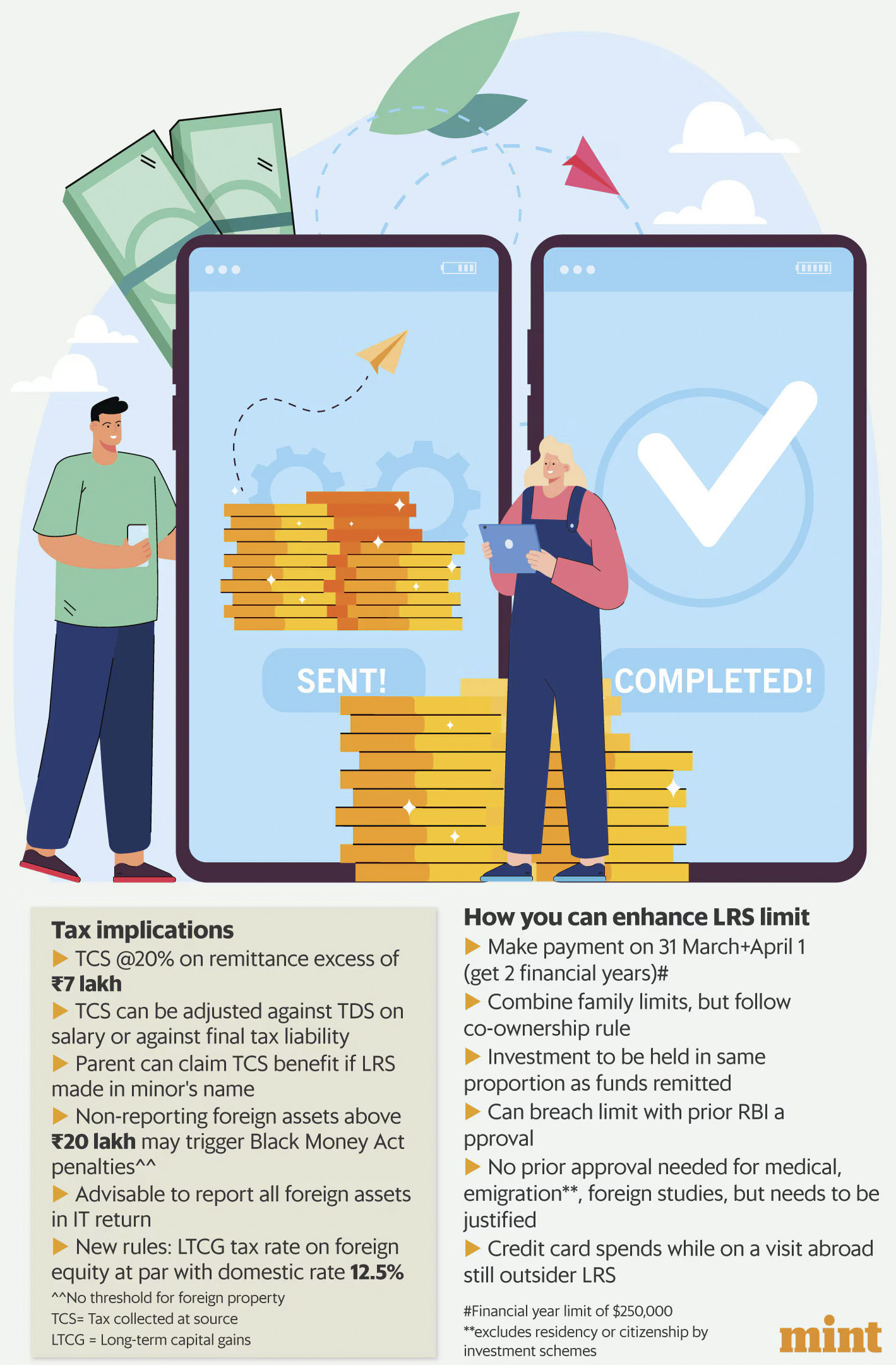
Table of Contents
Liberalised Remittance Scheme: A Complete Guide for Indian Residents
Comprehensive overview of the Liberalised Remittance Scheme (LRS) under the Foreign Exchange Management Act (FEMA), 1999. LRS has become increasingly important as more Indians invest globally, pay for overseas education, travel abroad, purchase foreign assets, and engage in cross-border transactions.
What is the Liberalised Remittance Scheme?
The Liberalized Remittance Scheme is an Reserve Bank of India framework that allows resident individuals in India to remit money abroad without obtaining prior approval from the Reserve Bank of India, subject to prescribed limits and conditions. The scheme represents India’s shift from the restrictive FERA regime to the more facilitative Foreign Exchange Management Act framework.
Under the Liberalized Remittance Scheme, resident individuals can remit funds for both current account and capital account transactions within the permitted annual ceiling.
Evolution of LRS Limits
The remittance limits have evolved significantly since the scheme’s introduction:
- February 2004: USD 25,000
- 2006–2007: Increased gradually to USD 200,000
- August 2013: Reduced to USD 75,000 during market volatility
- Since 2015: USD 250,000 per financial year
Now it is USD 250,000; the annual limit applies collectively to all eligible transactions undertaken by an individual during a financial year.
Who Can Use the Liberalized Remittance Scheme?
- LRS is Eligible Persons: The scheme is available to Resident individuals, Minors through their natural guardian and Individuals remitting for approved overseas purposes
- LRS is Not an Eligible Person: The following entities cannot use the Liberalized Remittance Scheme: companies, LLPs, partnership firms, trusts, Hindu Undivided Families, and other non-individual entities. The Liberalized Remittance Scheme is specifically designed for resident individuals and not for business entities
Permissible Uses of Liberalised Remittance Scheme
Indian residents commonly use the Liberalized Remittance Scheme for:
- Education Abroad: Tuition fees, living expenses, and University-related payments
- Medical Treatment: Overseas medical expenses, hospital deposits, and Accompanying attendants’ expenses
- Travel and Tourism: International travel expenses and Foreign tour packages.
- Overseas Investments: Foreign stocks and securities, Overseas mutual funds, Foreign bank accounts and Property purchases abroad
- Gifts and Maintenance: Gifts to relatives abroad and maintenance of close relatives residing overseas.
These transactions can be undertaken without prior Reserve Bank of India approval, subject to FEMA conditions.
How Does a Liberalized Remittance Scheme Work?
The remittance process involves:
Step-1: Approach an Authorised Dealer (AD) Bank: An AD bank acts as the intermediary for all foreign exchange transactions.
Step-2: Submit Documentation: The remitter must provide PAN, Form A2, supporting documents, and a purpose of remittance declaration
Step-3: Compliance Verification: The bank performs KYC checks, Anti-Money Laundering (AML) checks, Foreign Exchange Management Act compliance review and Transaction genuineness verification
Step-4: Processing: Upon successful verification, the bank processes the remittance.
Importance of Form A2 :
Form A2 is the cornerstone of Liberalized Remittance Scheme compliance. The form captures applicant details, purpose code, transaction declarations, and bank certification. Since Foreign Exchange Management Act compliance largely depends on the declared purpose, accurate disclosure in Form A2 is critical.
Tax Collected at Source Under Liberalised Remittance Scheme
The presentation highlights important Tax Collected at Source provisions applicable from 1 April 2026.
Education and Medical Remittances
-
-
- Up to INR 10 lakh: No TCS
- Above INR 10 lakh: 2% TCS
-
Overseas Tour Packages: Flat 2% TCS
Other LRS Transactions:
-
-
- Up to INR 10 lakh: No TCS
- Above INR 10 lakh: 20% TCS
-
Inoperative PAN Cases: Higher Tax Collected at Source rates may apply where PAN is inoperative
Transactions Prohibited Under Liberalised Remittance Scheme
Certain activities remain prohibited, like the purchase of lottery tickets, sweepstakes participation, football pools, margin trading overseas, margin calls to foreign exchanges, trading in foreign exchange abroad, and the purchase of specific prohibited foreign assets. The presentation also notes restrictions relating to FATF-blacklisted jurisdictions.
Repatriation and Retention Rules
- Income from Overseas Investments: Income generated through overseas investments can generally be retained and reinvested abroad.
- Mandatory Repatriation: Unutilized or realized foreign exchange may need to be repatriated to India within specified timelines, generally within 180 days, subject to applicable regulations.
- Loans and Gifts to NRIs: Liberalised Remittance Scheme permits residents to provide
- Interest-Free Loans: To close relatives who are NRIs or PIOs, subject to annual liberalized remittance scheme limits, Minimum maturity of one year, Credit to NRO account, Use for permitted purposes in India
- Gifts : Resident individuals can gift funds to eligible relatives within the Liberalised Remittance Scheme limit. The recipient’s account and end-use conditions must comply with Foreign Exchange Management Act regulations.
Common Compliance Mistakes
The presentation highlights several practical compliance risks:
- Using the Liberalized Remittance Scheme for Business Expenses: A partner cannot use personal LRS limits to settle business liabilities of a firm.
- Hindu Undivided Family Remittances: Hindu Undivided Family bank accounts cannot use the Liberalized Remittance Scheme since the scheme applies only to resident individuals.
- Incorrect Classification: Misclassifying Overseas Direct Investment and Overseas Portfolio Investment can create FEMA compliance issues requiring regularization.
- Family Fund Routing: Capital account transactions require a proper source of funds and cannot be structured merely to circumvent limits.
In Summary
The Liberalised Remittance Scheme has become a crucial mechanism for global financial participation by Indian residents. Whether funding overseas education, investing in foreign securities, purchasing international assets, or supporting family members abroad, Liberalised Remittance Scheme provides significant flexibility while maintaining regulatory oversight under the Foreign Exchange Management Act. Taxpayers, chartered accountants, financial advisors, and also remitters must carefully monitor:
- Annual USD 250,000 limits
- Proper purpose coding
- TCS implications
- Foreign Exchange Management Act compliance requirements
- Repatriation obligations
- Documentation and reporting requirements
A well-planned Liberalised Remittance Scheme transaction not only ensures regulatory compliance but also helps avoid costly penalties, delays, and future scrutiny from regulatory authorities.
**********************************************************
If this article has helped you in any way, i would appreciate if you could share/like it or leave a comment. Thank you for visiting my blog.
Legal Disclaimer:
The information / articles & any relies to the comments on this blog are provided purely for informational and educational purposes only & are purely based on my understanding / knowledge. They do noy constitute legal advice or legal opinions. The information / articles and any replies to the comments are intended but not promised or guaranteed to be current, complete, or up-to-date and should in no way be taken as a legal advice or an indication of future results. Therefore, i can not take any responsibility for the results or consequences of any attempt to use or adopt any of the information presented on this blog. You are advised not to act or rely on any information / articles contained without first seeking the advice of a practicing professional.